
How to make my own website is one of the most searched phrases online right now, and it makes complete sense why. Every day, thousands of business owners, freelancers, and entrepreneurs wake up and realize the same terrifying truth: they are invisible online.
Think about that for a second.
According to recent studies, 88% of consumers research a business online before deciding to make a purchase. That means when someone hears about your business, the very next thing they do is type your name into Google. And if nothing shows up, or if what shows up looks unprofessional and broken, you have already lost them before you even said hello. Pixel-master
75% of consumers judge a business’s credibility based on its website. Not your product. Not your staff. Not your years of experience. Your website. It is the very first thing they trust or dismiss. And here is the part that should genuinely keep you up at night: 70 to 80% of potential customers could be lost to businesses without a website. Infix Digital LtdReview42
That is not a typo. That is not an exaggeration. That is the reality of doing business in 2026. Thinking how to make my own website. If you are wondering how to make my own website, the first thing you need is a clear idea of what your website will be about.
So the question of how to make my own website is not just a technical one. It is a survival question. And this article is going to answer it completely, step by step, in plain language, with no confusing jargon. We gathered the most trending questions people are actually typing into Google, and we answered every single one with honesty, clarity, and real-world examples.
Whether you are starting from absolute zero or you have been putting this off for months, by the time you finish reading, you will know exactly what to do next.
Creating your own website is easier today than ever before, even if you have no coding experience. When learning how to make my own website, choosing the right website platform can save you time and effort later.
Q1. Can I Make My Own Website for Free? (And Should I?)
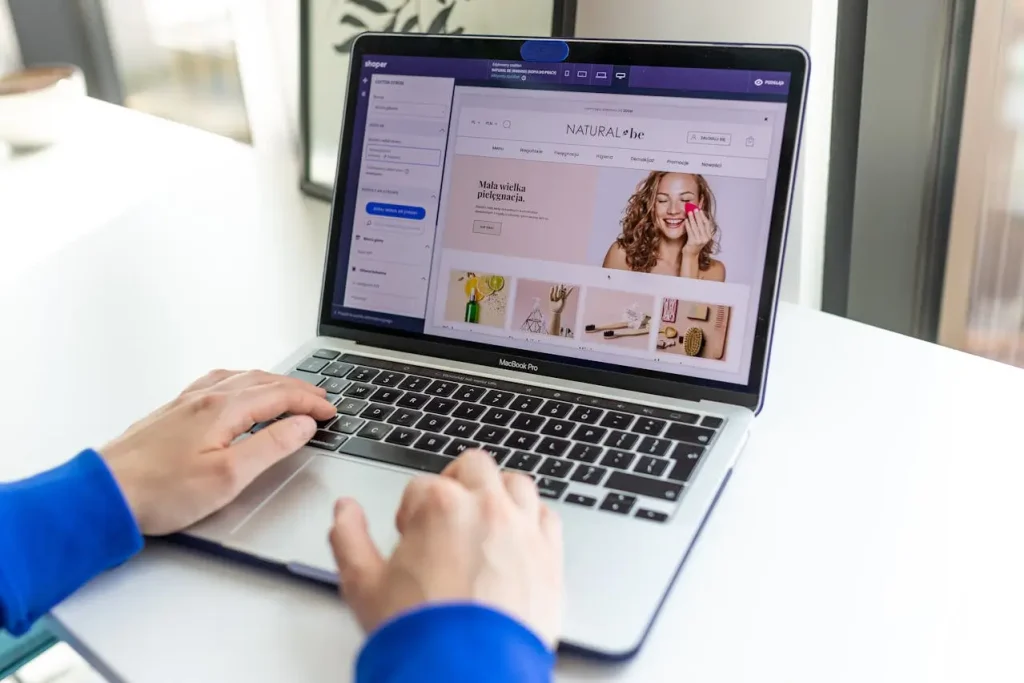
This is the most common starting point for anyone searching how to make my own website. And the honest answer is yes, you can start for free. But free comes at a serious hidden price.
Platforms like WordPress.com, Wix, and Google Sites all offer free tiers. You can sign up, drag and drop a template, and technically have a “website” live within an hour. But here is what those platforms do not tell you upfront. A big part of how to make my own website is selecting a domain name that is simple, memorable, and professional.
Free websites do not give you a real domain name. Instead of yourstore.com, you get something like yourstore.wordpress.com or yourstore.wixsite.com. This single detail destroys your credibility instantly. Imagine handing someone a business card with a Gmail address instead of your company email. Same feeling. People notice, and they trust you less because of it.
Free websites usually carry the platform’s branding, not yours. Wix ads will appear at the bottom of your page. WordPress.com will push their banners. You are paying for your website with your brand reputation instead of money.
Free websites typically have zero SEO control. You cannot optimize your metadata, set up Google Analytics properly, or configure the settings that tell Google your website is worth ranking. You are essentially building a beautiful shop in a city where no roads lead to it.
Free tiers of builders come with limitations that appear quickly including ads, lack of SEO control, and limited design flexibility. Bits Kingdom
Here is a real-world analogy. Imagine you open a restaurant but you are not allowed to put your name on the sign outside. Instead, the building owner’s name goes there, and you can only tell people that you “kind of” have a restaurant in there. That is a free website in practice.
The good news is that a proper, professional website does not have to cost a fortune. A domain name costs between $10 to $20 per year, and web hosting runs from $3 to $30 per month depending on your plan. That is often less than what you spend on coffee in a week, and it gives you a fully owned, professional digital address that works for you 24 hours a day. Creative Themes
If you want to know how to make my own website the right way, start by accepting that the free route is a short cut that usually leads to a dead end.
If you want to make my own website, the first thing you need is a clear idea of your goal.
Q2. What Do I Actually Need Before I Start Building My Website?

Most people jump into website builders without any preparation, and then they get stuck five hours in wondering why everything looks like a mess. Before you search how to make my own website on YouTube and start clicking buttons, you need three things clearly defined.
Your goal. What is this website supposed to do? Sell a product? Get phone calls? Show your portfolio? Book appointments? Every decision you make later, from design to words to layout, flows from this one answer. A website without a clear goal is like a salesperson who talks a lot but never asks for the sale.
Your audience. Who are you trying to reach? A restaurant targeting young professionals needs a completely different look and feel than a law firm targeting corporate clients. Your audience’s age, habits, and expectations should shape every design decision you make.
Your content. This is where most people get stuck. They build the website and then realize they have no idea what to write on it. Before you touch a single design tool, write out your homepage headline, your About section, your services list, and your contact information. Content first, design second. Always.
While most people start by thinking about what they want to tell people, a more effective approach is to start with what you want your visitors to take from your website. Mighty Networks
Once you have your goal, audience, and content ready, you need three technical things to go live. Many beginners choose WordPress when they want to make my own website without coding.
A domain name. This is your web address, like planasite.com. Pick something that matches your business name, is easy to spell, and ends in .com wherever possible. Dot-coms are still the best and look the most legitimate. Mighty Networks
Web hosting. This is the server where your website files actually live. Think of your domain as your home address and hosting as the physical house. Without hosting, your domain points to nothing.
A website platform. This is the tool you use to actually build and manage your pages. WordPress is by far the most popular choice in the world today, and for very good reasons.
Understanding hosting is important when researching how to make my own website because it keeps your site online.
Q3. Why Is WordPress the Most Recommended Platform for Building a Website?

When someone asks how to make my own website, the answer almost always circles back to WordPress. And no, it is not just because developers prefer it.
WordPress now powers over 43% of all websites on the internet, which is a testament to its flexibility and user-friendliness. That means nearly half of every website you visit today, from global news publications to local bakeries, is running on WordPress. That number alone should tell you something important. DreamHost
So why does WordPress dominate?
First, it gives you total ownership. Unlike website builders such as Wix or Squarespace where your content technically lives on their servers under their rules, a self-hosted WordPress website (WordPress.org) is yours entirely. If the company behind your builder ever shuts down, raises prices dramatically, or changes their terms, you are stuck. With WordPress, you own every file, every image, every piece of content.
Second, WordPress is endlessly scalable. Whether you need a simple five-page business website today or a full eCommerce store with 500 products next year, WordPress handles it without you needing to migrate to a different platform and start over.
Third, the SEO capabilities of WordPress are unmatched at this price point. With free tools like Yoast SEO, you can control exactly how your website appears in Google search results, set up sitemaps, write custom descriptions, and optimize every single page. This matters enormously because a website that Google cannot find is a website that no customer can find.
Fourth, the design options are vast. With thousands of free and premium themes plus drag-and-drop page builders like Elementor, you can create a website that looks like it cost $20,000 without any coding knowledge.
A quick case study: Imagine a small clothing boutique owner in Dhaka. She spent months on Instagram growing her following. Then Instagram changed its algorithm and her reach dropped by 60% overnight. The customers who had always visited her through Instagram suddenly stopped seeing her posts. She had no website, no email list, no other digital home. Her business suffered for months. Had she invested in a WordPress website early on, her traffic would not have been at the mercy of someone else’s algorithm.
That is the WordPress advantage. Control, ownership, and stability.
One of the easiest ways to learn how to make my own website is by using beginner-friendly builders like WordPress or Wix.
Q4. How Much Does It Cost to Make My Own Website?
This is the question that makes most beginners nervous, and it is usually because they have seen wildly different numbers online. Let us break it down clearly.
The cost of how to make my own website depends almost entirely on one factor: who builds it.
If you build it yourself using WordPress, the basic costs look like this. A domain name typically runs $10 to $20 per year, web hosting costs $3 to $30 per month, and a premium theme is optional at $50 to $100 per year. In your first year, you might spend anywhere from $50 to $200 total if you are careful. Creative Themes
If you hire a freelancer, the price goes up but so does the quality and your time saved. The hourly rate of a freelance WordPress developer ranges from $15 to $150 per hour depending on expertise. A basic website might take 20 to 40 hours of work, putting your total somewhere between $300 and $6,000. Anglara
If you hire a professional agency, you get a full team handling design, development, SEO setup, and post-launch support. Building a WordPress website can cost anywhere between $100 and $30,000 depending on the type, scale, and complexity of the site. A professional business website from a reputable agency typically falls in the $2,000 to $10,000 range. Ajroni
The hidden cost nobody talks about is the cost of doing it badly. A slow, broken, or ugly website does not just fail to attract customers. It actively drives them away. For every 1 second delay in site load time, conversions fall by 12%. That means a website built on cheap, overcrowded hosting that loads slowly is costing you sales every single day. Review42
Think of your website the same way you think of your physical storefront. Would you open a shop with a broken sign, lights that flicker, and a door that sticks? Of course not. The same logic applies to your digital front door.
The smartest approach for most small business owners is to work with a trusted professional agency or developer who can get you a clean, fast, mobile-friendly WordPress website quickly. The return on investment becomes clear very fast. Over 70% of small businesses report increased revenue after launching a site, and those with optimized web experiences generate up to two times more leads. Network Solutions.
Your website design plays a major role in how to make my own website look trustworthy and modern to visitors.
Q5. Do I Need a Domain Name and Hosting, and What Is the Difference?
When people research how to make my own website, the terms domain and hosting tend to blur together. They are two very different things, and you need both.
Here is the simplest way to understand it.
Your domain name is your address. Just like your home has a street address that tells people where to find you, your domain (like yourcompany.com) tells browsers where to find your website.
Your hosting is the actual building at that address. The files, images, databases, and code that make up your website all live on a hosting server. Without hosting, your domain is an address with no building behind it. Without a domain, your hosting server is a building nobody can find.
You need both, and they work together.
When choosing a domain name, keep these rules in mind. Make it short. Make it memorable. Make it easy to spell when heard out loud. Avoid hyphens and numbers when possible. And get the .com version if it is available because users instinctively type .com when they type a website address from memory.
For hosting, beginners are usually best served by shared hosting plans, which are affordable and more than sufficient for a new website. As your traffic grows, you can always upgrade to managed WordPress hosting, which costs $25 to $150 per month but offers significantly faster speeds, enhanced security protocols, automatic daily backups, and expert WordPress support. Elementor
One important tip: buy your domain and hosting from reputable providers. Companies like SiteGround, Bluehost, and Cloudways are all trusted names in the WordPress community. If you are working with a web development agency, they can often handle this entire setup for you as part of their service.
Adding useful pages like Home, About, Services, and Contact is essential when planning how to make my own website.
Q6. How Long Does It Take to Build a Website?
This is one of the most underestimated questions in the how to make my own website journey. People assume they can get a proper business website done over a weekend. Sometimes that works. Often it does not, and the rushed result shows.
Here is an honest breakdown of timelines depending on the approach.
DIY approach with no experience: Expect to spend two to eight weeks from your first login to a website that actually looks and functions professionally. The learning curve for WordPress, themes, and plugins is real. You will make mistakes, watch tutorials, and redo things multiple times. This is normal, but it takes time.
Hiring a freelancer: Depending on their availability and your feedback speed, a freelance WordPress developer typically delivers a basic website in two to four weeks.
Hiring a professional agency: A quality agency with a streamlined process can often deliver a complete, professional, mobile-optimized WordPress website in seven to fourteen days. This is the fastest path to a result you can be proud of, because the agency does this every single day and has systems in place to move quickly without cutting corners.
The biggest time killer in any website project is not the technical work. It is content delays. Clients take weeks to write their About page, gather their service descriptions, collect photos, and finalize their brand messaging. The technical side can often be done in days. The content side drags things out.
So if you want to move fast, here is the most important tip: gather your content before the build starts. Have your logo, your photos, your service descriptions, your contact details, and your headline ready to hand over on day one.
This is exactly why agencies like Planasite exist. With a clear process and an experienced team, getting your website ready in 7 days is absolutely achievable, because we handle the heavy lifting so you do not have to.
Search engine optimization is an important step in how to make my own website visible on Google and other search engines.
Q7. What Pages Does My Website Actually Need?
One of the biggest mistakes people make when they figure out how to make my own website is over-complicating the structure. They plan for fifteen pages when three or four would work far better.
Here is what a solid, professional business website needs at minimum.
Home Page. This is your digital storefront window. It needs to communicate what you do, who you do it for, and what the visitor should do next, all within the first five seconds of landing on the page. A strong headline, a clear sub-headline, and one obvious call to action button. That is it. Do not clutter it.
About Page. People do not just buy products or services. They buy from people they trust. Your About page is where that trust is built. Tell your story. Share your experience. Show your team if you have one. Make it human and specific.
Services or Products Page. Clearly list what you offer, what the benefit is, and how someone can get it. Avoid vague language. Be specific. If you offer five services, list all five with a short description of each.
Contact Page. A well-designed, easy-to-find Contact page is a must. It is basically your best salesperson. At any time, a visitor can navigate to your Contact page and find key information about your business including hours of operation, location, and contact details. GoDaddy
Optional but highly recommended pages include a Testimonials or Reviews page and a Blog or Resources section. Testimonials build instant social proof. A blog helps with SEO by creating fresh content that search engines can find and index over time.
Keeping your website updated and secure is a key part of maintaining how to make my own website successfully over time.
Keep navigation simple. If a first-time visitor cannot figure out where to click within ten seconds, you have already lost them. Simplicity is not laziness. Simplicity is respect for your visitor’s time.
Q8. Does My Website Need to Be Mobile-Friendly?
Short answer: yes, absolutely, completely, non-negotiably yes.
Here is why this matters so much when you are learning how to make my own website. Most of the people who will visit your website are doing it on a smartphone. Not a laptop. Not a desktop monitor. A phone. And if your website is not optimized for mobile screens, it will look broken, it will be frustrating to use, and your visitor will leave within seconds.
84% of users would abandon a purchase if the connection is not secure. And similarly, a site that is hard to use on mobile triggers immediate distrust and abandonment. Review42
Google has officially moved to mobile-first indexing. That means when Google ranks your website in search results, it judges your mobile version first, not your desktop version. A website that looks great on a laptop but falls apart on a phone will rank poorly in Google search, which means fewer people finding you in the first place.
The good news is that most modern WordPress themes are built to be responsive by design. A responsive website automatically adjusts its layout, text size, images, and button sizes to fit whatever screen the visitor is using. When you choose your theme or work with a developer, confirming that the design is responsive is non-negotiable.
Here is a quick test you can do right now. Open your favorite competitor’s website on your phone. Does it look clean and easy to navigate? Or do you have to zoom in and scroll sideways? That experience you just had is the exact experience your visitors will have on your website if you do not prioritize mobile design.
Speed matters just as much on mobile. A page that loads in under three seconds keeps visitors. A page that takes five or more seconds to load loses over half of them before they even see your content.
Once you understand the basics of how to make my own website, growing your online presence becomes much easier.
Security features and regular backups are necessary when managing how to make my own website safely online.
The more you practice and learn, the easier the journey of how to make my own website becomes over time.
Q9. Should I Build My Own Website or Hire Someone?
This is the final and perhaps most important question in the how to make my own website journey. And the answer depends on being completely honest with yourself about three things: your time, your skills, and your goals.
Build it yourself if: You have a genuine interest in learning web design and technology. You have several weeks or months to invest in figuring it out through trial and error. Your budget is extremely tight and you have no immediate urgency to get online. Your website is a personal project or portfolio and not your primary business asset.
Hire someone if: Your time is valuable and better spent on running your actual business. You need to look professional and trustworthy from day one. You want the website done correctly the first time, not rebuilt in six months after realizing the DIY version is not working. You want SEO, speed, security, and mobile optimization built in from the start, not added as an afterthought.
Many beginners search for how to make my own website because they want an affordable way to build an online presence.
Here is the economic reality of figuring out how to make my own website yourself. Let’s say you spend 40 hours over three weeks trying to build your own website. If your time is worth just $20 per hour, you have spent $800 worth of your time on something a professional could have done better in a fraction of the time. And if you have to redo it later because customers are not responding well to it, you double that investment. Adding clear calls-to-action can improve how to make my own website convert visitors into customers or subscribers.
According to Google’s consumer research on how small businesses are found online, a local business without a website loses an estimated 20 to 35% of referred customers during the verification step, the moment between hearing about a business and deciding to contact them. For a plumber averaging $500 per job and 10 referrals per month, that equals $1,500 per month in invisible revenue loss, or $18,000 per year lost to referral leakage alone. A $2,000 website pays for itself in 6 weeks at those numbers. LeadsAgent
That is the real math behind not having a website, or having one that looks untrustworthy and broken.
A professional, well-built website is not an expense. It is the single highest-return investment most small businesses can make.
Get your professionally designed WordPress website in 7 days.
At Planasite, we handle design, development, and delivery. No confusion, no delays, no generic templates. Just a website built for your business, ready in a week.
Common Mistakes People Make When Building Their First Website
Even after reading all about how to make my own website, people still fall into the same traps. Here are the most damaging ones and how to avoid them. Fast loading speed is an essential part of how to make my own website provide a better experience for visitors.
Choosing the wrong platform and regretting it later. Starting with a free drag-and-drop builder that feels easy but locks you in is a common regret. Migrating away from these platforms later is expensive and painful. Start with WordPress from the beginning and grow without limits.
Writing for themselves instead of their visitors. Your homepage is not your autobiography. It is a conversation with a potential customer who is asking, “Can this business solve my problem?” Every word on your website should answer that question directly.
Ignoring SEO from the start. Many business owners build a beautiful website and then wait for customers to show up. They do not. Without basic SEO setup including title tags, descriptions, fast loading speed, and mobile optimization, Google simply will not show your website to anyone.
Using low-quality photos. Blurry photos, stock images that look generic, and inconsistent branding visuals all undermine the professionalism of your website. Even a smartphone photo taken in good lighting is better than a pixelated image stretched across a banner.
No clear call to action. Every page of your website should tell the visitor exactly what to do next. Call now. Book a consultation. Send a message. Get a quote. Without a clear next step, visitors browse and leave without ever converting into customers.
Launching and forgetting. A website is not a set-it-and-forget-it asset. Fresh content should be added monthly, maintenance should run weekly, and design should be refreshed every two to three years. Google rewards websites that are actively maintained and updated. Bits Kingdom.
Learning how to make my own website can help you promote your business, portfolio, blog, or personal brand online.
The Truth About “How to Make My Own Website” That Nobody Says Out Loud
Here is something the YouTube tutorials and website builder advertisements will never tell you. Understanding basic SEO techniques is useful for anyone researching how to make my own website rank better on Google.
Building a website is not the hard part. Building a website that actually brings in business is the hard part.
Anyone can drag and drop elements on a template. Anyone can buy a domain and put some text on a page. The thing that separates a website that generates real customers from one that just sits there is strategy, professional design, proper technical setup, and conversion-focused content.
That is the gap between “I have a website” and “my website works.”
Small businesses with modern websites report 15 to 50% revenue increases. That is not because having any website magically grows revenue. It is because a properly built website, designed with clear goals, optimized for search engines, and structured to convert visitors into leads, fundamentally changes how a business operates. Network Solutions
It works while you sleep. It answers questions your customers have at midnight. It builds trust before someone even picks up the phone. It keeps your business visible to the 88% of consumers who research online before buying.
The process of how to make my own website usually starts with buying a domain name and web hosting service.
Conclusion: Your Next Step Starts Right Now
If you have been asking how to make my own website, you now have every answer you need. The goal, the platform, the costs, the pages, the mobile requirements, the timeline, and the honest trade-offs between DIY and professional help. Choosing the right colors, fonts, and images can improve how to make my own website look professional and attractive.
Here is your one actionable summary: do not let perfect be the enemy of done, but do not let “done” mean “done badly.” A half-finished DIY website that crashes on mobile and takes eight seconds to load is worse than no website, because it actively drives customers away.
The fastest, safest, and smartest path for most business owners is to work with a professional team who can deliver a clean, fast, beautiful WordPress website that is built to be found on Google, trusted by visitors, and ready to convert browsers into buyers.
The question is not whether you can afford to build a website. The question is whether you can afford to remain invisible while your competitors capture customers you could be serving. Sonata Sites
Every day you wait is another day your competitor’s website is showing up where yours should be.
Ready to stop waiting? Contact Planasite today and get your professional WordPress website ready in just 7 days. No confusion, no technical headaches, no wasted time. Just a website that works.
A mobile-friendly layout is an important factor when deciding how to make my own website more user-friendly.
At Planasite, we specialize in helping business owners who are ready to get online fast without the overwhelm. Whether you are building your very first website or replacing one that stopped working, our team handles everything from domain setup to design to launch. Contact us now and be live in 7 days.
How was your journey through – How to Make My Own Website? Share.