

Website design process before development is something most business owners never think about. They simply find a developer, say “build me a website,” hand over a logo and some photos, and then wait. A few weeks later, they are shocked. The site looks nothing like what they imagined. The colors feel wrong. The pages are in the wrong order. Half the features they assumed would be there are missing. And the developer, equally frustrated, has no idea what went wrong.
Here is what actually went wrong: nothing was planned before a single line of code was written.
This is not a rare horror story. This is the most common reason website projects go over budget, miss deadlines, and end in disappointment. And the scariest part? It is completely avoidable.
A staggering 94% of first impressions of a website are design-related. That means the moment someone lands on your page, they have already formed an opinion, not based on your product, not based on your price, but based purely on how the website looks and feels. And if that first impression is bad, they are gone. 57% of internet users say they will not recommend a business with a poorly designed mobile website. Marketing LTB
You only get one shot at that first impression. The website design process before development is how you make sure you do not waste it.
This guide is going to walk you through the most important questions people are asking right now about the design process that happens before any development begins. We will answer each one clearly, with real examples and hard statistics, so you understand exactly what needs to happen before your website is built.
Why Does the Website Design Process Before Development Even Matter?
Let us start with the most fundamental question, because so many business owners skip straight to “just build it.”
Think of building a website like building a house. You would never hand a contractor a pile of bricks and say “just build something.” You would sit down with an architect first. You would discuss how many rooms you need, which direction the house should face, what the plumbing layout looks like, and where every window goes. All of that happens on paper, through blueprints, long before a single brick is laid.
The website design process before development is your blueprint phase.
Without it, the developer is guessing. And when a developer guesses, you pay for every change. Every revision. Every “that is not what I meant” moment. These costs add up fast.
According to designers at HubSpot, when there is no alignment between designers, developers, and the client before work begins, implementation takes far longer than necessary, and more design rounds end up being required. In a worst-case scenario, the entire design has to change due to technical reasons that were never discussed upfront. HubSpot
That is not just frustrating. That is expensive. And it is entirely preventable when you invest time in the website design process before development.
Now let us get into the specific questions people are asking most about this topic.
Q1: What Is the Website Design Process Before Development and Why Does It Start Before Coding?
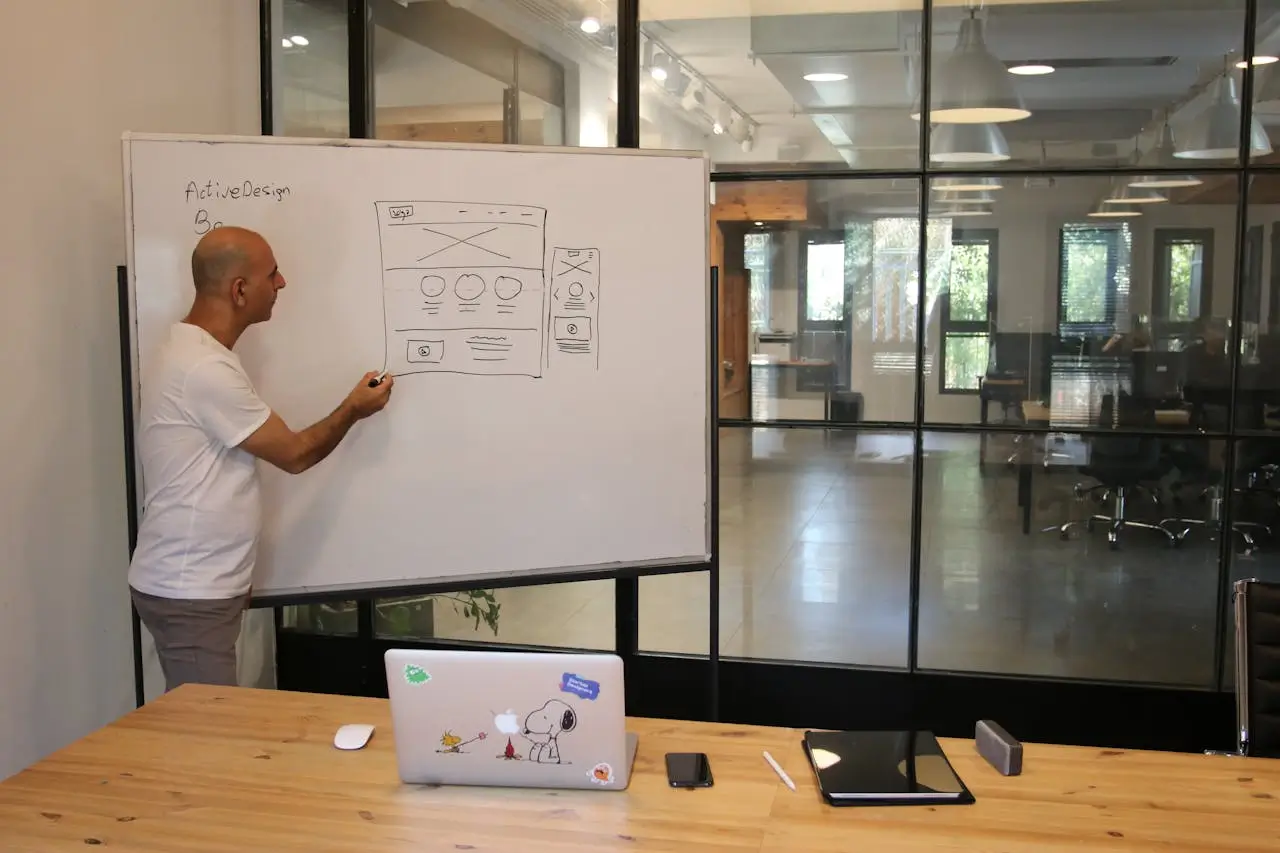
This is the number one question beginners ask, and it is a great place to start.
The website design process before development refers to everything that happens between “I need a website” and “let us start writing code.” It includes planning your goals, understanding your audience, organizing your content, choosing your visual direction, creating wireframes, and building prototypes. None of this requires a developer. All of it requires clear thinking.
Here is why it has to come before coding.
Changing a plan on paper costs you nothing. Changing a plan after development has begun costs time, money, and sometimes the entire project. A designer can move a button on a wireframe in 30 seconds. A developer moving that same button after it has been coded, styled, and connected to a database can take hours.
81% of consumers research businesses online before making a purchase. That means your website is often the very first interaction someone has with your brand. If it is confusing, slow, or visually messy because it was not planned properly, those potential customers are gone before they even learn what you do. Sonata Sites
The website design process before development protects you from that outcome. It ensures that by the time a developer starts writing code, every major decision has already been made and approved. The developer is not guessing. The client is not surprised. Everyone is working from the same blueprint.
Think of a film director. They do not just show up on set and say “let us see what happens.” They spend months in pre-production: writing the script, storyboarding every scene, casting the right actors, scouting locations. The actual filming is faster and smoother because everything was figured out beforehand. The website design process before development is your pre-production phase.
Q2: What Are the 7 Stages of the Website Design Process Before Development?

Great question. The website design process before development is not one big vague step. It is a series of clearly defined stages, each one building on the last. Here they are:
Stage 1: Discovery and Goal Setting
Everything starts with a conversation. Before a single design element is created, the team needs to understand what the website is supposed to accomplish. Who is the target audience? What action do you want visitors to take? What problem does the business solve?
Determining the core values of the company helps guide design choices, including the function of the website, the target audience, specific features, and the overall image the site should project. Indeed
This stage also involves researching competitors. What are they doing well? Where are the gaps? Understanding the competitive landscape during the website design process before development allows you to position your site strategically, not just aesthetically.
Stage 2: Defining Your Target Audience
You cannot design a website for “everyone.” A website that tries to speak to everyone ends up speaking to no one. The discovery phase of the website design process before development requires getting extremely specific about who you are designing for.
A restaurant website needs to speak to hungry locals searching on their phones. A law firm website needs to communicate trust and authority. A fashion brand needs visual impact. The audience determines everything, from the font choice to the color palette to the type of photos used.
Stage 3: Content Planning and Information Architecture
This is where you decide what pages the website will have, what content will go on each page, and how those pages will be connected through navigation. This is called information architecture, and it is one of the most overlooked parts of the website design process before development.
Think of information architecture like the table of contents in a book. If the table of contents is confusing, the reader gives up before even starting. If it is clear and logical, the reader knows exactly where to go.
At this stage, you also plan the actual written content. What headlines will you use? What is the main message on the homepage? What does the About page say? Writing and reviewing an entire site’s copy takes significant time, and underestimating it is one of the most common and costly mistakes in the design process. Zaginteractive
Stage 4: Visual Direction and Branding
Now comes the fun part, at least for most clients. This stage of the website design process before development involves choosing the visual identity of the site: colors, typography, imagery style, and overall mood.
Should the website feel bold and energetic, or calm and professional? Should it use photography or illustrations? Should the fonts be modern and minimal or warm and friendly?
These decisions are not random. They come directly from the audience research done in Stage 2. A fintech startup and a kids’ toy brand are both trying to build trust, but through completely different visual languages.
Stage 5: Wireframing
A wireframe is a simple black-and-white sketch, either on paper or using a digital tool, that shows the layout of each page without any colors or images. It is a skeleton. It shows where the headline goes, where the navigation sits, where the call-to-action button will appear, and how the content sections are arranged.
Wireframes are a core part of the website design process before development because they let everyone see and agree on the structure before any visual design begins. Changes at the wireframe stage are fast and cheap. Changes at the design stage are slow and expensive.
Stage 6: Mockups and Prototyping
Once wireframes are approved, the designer adds colors, typography, images, and branding to create a full-color mockup. This is what the website will actually look like. At this stage of the website design process before development, the client can see a realistic preview of their site and give feedback before any code is written.
Some teams go further and create an interactive prototype, where you can actually click through the mockup as if it were a real website. This is especially useful for catching usability problems before development.
Stage 7: Final Approval Before Handoff
The last stage of the website design process before development is the handoff. The developer receives the approved designs, along with detailed specifications: fonts, colors, spacing, image sizes, and interaction notes. With everything documented clearly, development can begin with confidence and minimal back-and-forth.
Q3: What Happens If You Skip the Website Design Process Before Development?

This is the fear question. And rightfully so, because the answer is genuinely alarming.
Skipping the website design process before development does not just slow things down. It actively sabotages the final result. Here is what typically happens when businesses jump straight to coding without proper planning.
You end up rebuilding the site. This is the most painful outcome. A site is built based on vague instructions, the client sees it and hates it, and the whole thing has to be started over. Every dollar and every hour spent on the first attempt is wasted. Without alignment at the beginning, designers and developers often end up in a situation where the entire design needs to change due to technical reasons, even after client approval. HubSpot
The project goes massively over budget. Every change request after development begins costs money. Moving a button, changing a page structure, adding a feature that should have been planned from day one, these all cost far more after coding has started than they would have cost during the planning phase of the website design process before development.
The site fails to convert visitors. A site built without audience research, content planning, and proper user experience design might look pretty but fail to drive any results. Around 70% of small business websites lack a clear call to action on their homepage. Why? Because no one planned for it. No one asked “what do we want visitors to do when they land here?” during the design process. Marketing LTB
You lose customers before they even contact you. 75% of consumers judge a business’s credibility based on its website design. A poorly designed site does not just fail to attract customers. It actively drives them away. And those customers go directly to your competitors. Infix Digital Ltd
Businesses that lack an online presence or have a poorly designed one risk losing 30 to 50 percent of potential customers to competitors who have a professional website. Infix Digital Ltd
That is not a small number. For a business doing modest revenue, that could represent tens of thousands of dollars per year in lost business, all because the website design process before development was skipped or rushed.
Q4: How Do You Define Goals During the Website Design Process Before Development?
Goal-setting is the foundation of the entire website design process before development. Without clear goals, every design decision becomes a matter of personal taste rather than strategic thinking. And when design decisions are based on taste alone, arguments happen, timelines stretch, and the final product serves no one.
Here is how to define goals properly before development begins.
First, ask yourself: what is the single most important action you want a website visitor to take? This is your primary conversion goal. For a restaurant, it might be making a reservation. For a law firm, it might be booking a consultation call. For a product brand, it might be completing a purchase. For a service business like Planasite, it might be filling out a contact form.
Every other design decision in the website design process before development flows from this primary goal. If your goal is to get someone to fill out a contact form, the form needs to be easy to find, easy to use, and visually prominent. The navigation should guide visitors toward it. The copy should create a desire to reach out. Everything works together.
Second, set measurable success metrics. “I want a good website” is not a goal. “I want to receive 20 contact form submissions per month within 3 months of launch” is a goal. Setting SMART goals, meaning Specific, Measurable, Attainable, Realistic, and Timely, helps ensure that the website becomes a profitable investment rather than just a digital brochure. HubSpot
Third, identify secondary goals. Perhaps the primary goal is contact form submissions, but you also want to showcase your portfolio to build credibility, and you want your blog to rank on Google for certain search terms. These secondary goals also influence the website design process before development, specifically the pages you need, the content you create, and the structure of the site.
Here is a real-world analogy. Imagine you are opening a physical store. Before you design the interior, you need to know: are you trying to get people to browse slowly and discover products, or are you trying to get them to the checkout counter quickly? A jewelry store and a fast-food restaurant both need customers to spend money, but their interiors are completely different because their goals are different.
The same logic applies to the website design process before development.
Q5: What Is Wireframing and Why Is It Essential in the Website Design Process Before Development?
Wireframing is one of the most underestimated and most valuable steps in the entire website design process before development. Yet many business owners skip it because it looks too simple, too basic, too “sketchy.”
That simplicity is the whole point.
A wireframe strips away all the visual noise, the colors, the images, the branding, and forces you to focus purely on layout and structure. It answers questions like: where does the headline go? How many items are in the navigation menu? Does the contact form appear on the homepage or on a separate page? How many sections does the homepage have and in what order?
These might sound like small decisions. They are not. The layout of a page directly influences whether visitors stay and take action, or leave within seconds.
Here is a mini case study. Imagine a small accounting firm in Dhaka that skipped wireframing and went straight to a full visual design. The designer created a beautiful homepage with a large hero image and their tagline. Then the developer built it. The client approved it. The site launched.
Three months later, no one was submitting contact forms. Why? Because the contact section was buried at the bottom of the homepage, below a lengthy “About Our Team” section and a blog widget. No one scrolled that far. If a wireframe had been created and reviewed during the website design process before development, the client would have immediately seen that the contact section was too far down, and the structure would have been changed before a single line of code was written.
Wireframes also make client feedback more useful. When you show a client a fully designed colorful mockup and they say “I do not like it,” you have no idea if they dislike the layout, the colors, the fonts, or the images. When you show them a wireframe first and they say “I do not like it,” the conversation is specifically about structure, which is much easier to fix.
The website design process before development should always include wireframes, even for simple websites. Even a one-page site benefits enormously from a wireframed layout.
Q6: How Does Content Planning Fit Into the Website Design Process Before Development?
Here is a truth that shocks most clients: a website cannot be designed without content. Or at least, it cannot be designed well.
Yet in most rushed projects that skip the proper website design process before development, the designer is handed nothing. No copy. No images. No specific information about services or prices. They fill the design with placeholder text, the developer builds it, and then three weeks before launch the client suddenly needs to write all the copy. Panic ensues. The launch is delayed. The copy is rushed and unconvincing.
Content planning during the website design process before development means deciding, before design begins, what every page will say, what images will be used, and how the information will be organized.
This does not mean you need to write every word before the design starts. But you do need a content outline. You need to know: how many service pages do you need? What are the key messages on the homepage? Do you have professional photos or will stock images be used? Will there be customer testimonials and if so, how many?
Underestimating copywriting needs is one of the most common mistakes in the website design process. Writing and reviewing an entire site’s copy takes time, and planning for it early, including assigning reviewers, is essential to avoiding delays close to launch. Zaginteractive
Think of content as the fuel and design as the engine. A beautiful engine is useless without fuel. If you do not plan your content as part of the website design process before development, you end up with a stunning-looking site that says nothing interesting.
Here is a practical approach. As part of the content planning stage, create a simple spreadsheet with one row for each page. For each page, note the page name, the primary goal of that page, the main headline, the main sections or paragraphs needed, and any images or videos required. This simple document becomes the content brief that guides the designer and ensures the design leaves appropriate space for every piece of content.
Q7: What Role Does Mobile-First Design Play in the Website Design Process Before Development?
This question is becoming more critical every year, and in 2025 and 2026, it is non-negotiable.
Mobile-first design means that during the website design process before development, the designer begins by designing for mobile screens first, then scales up to tablet and desktop. This is the opposite of how things used to be done, when designers would create a desktop layout and then squeeze it down for mobile.
The reason for this shift is simple: most of your visitors are on mobile.
41% of all web traffic comes from mobile devices. And 57% of internet users say they will not recommend a business with a poorly designed mobile website. That is more than half of all internet users actively discouraging others from visiting a site because the mobile experience was poor. Sonata SitesMarketing LTB
Visitors who do not find what they need within 5 seconds leave the site. On mobile, slow load times and hard-to-tap buttons cause that to happen constantly. Sonata Sites
When mobile-first design is incorporated into the website design process before development, the designer makes intentional decisions for small screens: larger tap targets for buttons, simplified navigation menus, images that load quickly, and content that is easy to read without zooming in.
This approach also affects technical decisions. The developer, receiving mobile-first design specs, knows to code the site with a responsive framework that works beautifully across all screen sizes. On WordPress, this is handled elegantly through responsive themes and page builders that support mobile-first development.
The website design process before development that ignores mobile is a process that is already setting the final product up for failure.
Q8: What Questions Should You Ask Your Web Designer or Agency Before Work Begins?
One of the most-searched questions around the website design process before development is what to actually ask a web design agency or freelancer before hiring them or signing a contract. Here are the most important questions and why each one matters.
“Do you have a documented design process?”
If a web designer has a documented design process or standard operating procedure, it is a strong sign they have solid experience and will lead you through the entire project from start to finish. If they have no process at all, that is a red flag. A good agency does not just design. They follow a proven website design process before development that reduces your risk as a client. Design Powers
“At what stage will I see designs, and how many revision rounds are included?”
Knowing when you can see designs, what happens if you do not like them, and how changes will be handled is essential information before signing any agreement. This is part of protecting yourself within the website design process before development. Gatorworks
“How do you handle SEO during the design process?”
SEO should be included from the very beginning of site development. Elements like logical navigation, strategic page titles, proper URL structure, heading formatting, image optimization, and mobile-friendliness all need to be built into the design from the start, not added as an afterthought. An agency that mentions SEO only as an upsell after the site is built does not truly understand the website design process before development. Design Powers
“Who is my main point of contact throughout the project?”
Having a central point of contact dedicated to your project, who manages every step from research through design, development, launch, and review, is essential for smooth communication and timely delivery. Design Powers
“Can I see examples of websites you have built in my industry?”
Always ask to see previous work. Ideally, they should be able to show you sites similar to what you are looking for. If they cannot, or if the work does not excite you, that tells you everything you need to know. Gatorworks
At Planasite, the website design process before development is fully documented and transparent. You know exactly what happens at every stage, who is responsible for what, and when you will see results.
Q9: How Long Should the Website Design Process Before Development Take?
Timing is one of the biggest sources of confusion and conflict between clients and agencies. Here is the honest answer.
The website design process before development typically takes anywhere from one to three weeks for a simple business website, and longer for complex projects. This is separate from the development phase, which adds additional time.
It is standard for a complete website project, including design and development, to take around three to four months. If an agency claims to deliver a finished website in under four weeks, that is likely a red flag. Gatorworks
However, there is an important nuance here. The length of the website design process before development is heavily influenced by how quickly the client provides feedback and approvals. Getting leadership input early on during each stage and avoiding delays in approval is critical to keeping the project on schedule. Planned vacations, holiday seasons, and other internal projects can affect the ability to meet deadlines. Zaginteractive
At Planasite, we have built a streamlined system that compresses this timeline significantly without cutting corners. Our proven website design process before development, combined with our WordPress expertise and rapid build system, allows us to deliver professional websites within 7 days of the design being approved. We do not sacrifice quality to do this. We have simply refined our process so thoroughly that there is no wasted time anywhere in the pipeline.
The key is coming to the process prepared: with your goals clear, your brand direction decided, your content outlined, and your key stakeholders aligned.
Q10: What Is the Difference Between a Website Wireframe and a Prototype?
This question comes up often because these two terms are sometimes used interchangeably, but they represent different stages of the website design process before development.
A wireframe is a low-fidelity layout, essentially a sketch that shows the structure of a page without any visual design. It uses simple boxes, lines, and placeholder text to map out where elements will be placed. Wireframes are created early in the website design process before development, often within the first few days of a project.
A prototype is a higher-fidelity version that can be interactive. You can click buttons, navigate between pages, and experience the flow of the website, all without any actual code. Prototypes are created after wireframes have been approved and after visual design mockups have been completed.
Think of it this way. If wireframes are the blueprint, prototypes are the model home. A blueprint shows you the room dimensions and layout. A model home lets you actually walk through the space and feel whether it works.
Both serve crucial purposes in the website design process before development, but not every project requires a full interactive prototype. Simple business websites often move from wireframe to mockup to development without a prototype stage. Complex e-commerce sites, membership platforms, or web applications almost always benefit from a prototype before development begins, because the cost of fixing user experience problems in a prototype is far lower than fixing them after the application has been built.
Q11: How Do You Ensure SEO Is Built Into the Website Design Process Before Development?
SEO, which stands for Search Engine Optimization, is what determines whether your website shows up on Google when potential customers search for your services. And one of the most damaging myths in the web industry is that SEO is something you add to a website after it is built.
It is not. SEO that is built into the website design process before development produces dramatically better results than SEO that is bolted on afterward.
Here is what good SEO-aware design planning looks like during the website design process before development.
Keyword research happens during the discovery phase. Before any page is structured or any content is written, you identify what your target customers are actually searching for on Google. These keywords then inform the page structure, the headings, the page titles, and the URL structure.
Information architecture is designed with search in mind. Each page is built around a specific topic and a specific keyword. The navigation structure makes it easy for both users and search engine bots to understand what the site is about.
Technical SEO requirements are communicated to the developer during the handoff. This includes proper heading hierarchy, image alt text standards, mobile responsiveness requirements, and page speed targets.
If SEO is not included from the beginning of site development, the website will not have the framework needed to be found online organically over time. Design Powers
At Planasite, SEO foundations are a standard part of every website design process before development that we run. We do not charge extra for it because we believe no client should launch a website that Google cannot find.
Q12: What Is a Design Brief and Why Do You Need One Before Development Starts?
A design brief is a short document that captures all the key decisions made during the early stages of the website design process before development. It is the written record of everything that has been agreed upon before design work begins.
A complete design brief typically includes the business goals, target audience profile, key messages, brand guidelines (colors, fonts, logo), competitor websites to reference, pages required, content outline, and examples of websites the client likes or wants to take inspiration from.
Why does this matter? Because without a design brief, the entire website design process before development is conducted verbally. And verbal agreements are forgotten, misremembered, and misinterpreted. The design brief serves as the single source of truth that everyone, client, designer, and developer, can refer back to when there is any confusion.
A website questionnaire, which forms the basis of the design brief, helps ensure that everyone involved in a project shares the same vision for the final deliverables. It is also an effective tool for setting and managing expectations. Elementor
Here is a practical tip: before you engage any agency or developer, take an hour to write down your answers to these questions. What do you want the website to accomplish? Who is your ideal customer? What three websites do you find visually appealing and why? What is your timeline and budget?
Having these answers ready before the first meeting dramatically improves the quality and efficiency of the entire website design process before development. Your agency will be able to jump straight into productive work rather than spending the first two weeks just trying to understand your business.
Summary: Your Actionable Checklist for the Website Design Process Before Development
If you have read this far, you now understand more about the website design process before development than the majority of business owners who are building websites right now. That is a powerful advantage.
Here is your quick-reference checklist before any development work begins on your website:
Goal setting: Write down the single most important action you want visitors to take on your website. Set 1-3 measurable goals.
Audience definition: Write a clear description of your ideal customer. Their age, their problems, their goals, and why they need your product or service.
Competitor research: Look at 3 to 5 competitor websites. Note what you like, what you think is missing, and where you can position yourself differently.
Content outline: List every page your website needs and write a brief description of what content will go on each page.
Brand direction: Confirm your logo, colors, and fonts. If these are not finalized, do this before the website design process before development begins.
Wireframe approval: Ensure your agency produces wireframes and that you approve them before any visual design work starts.
Visual mockup approval: Review and approve the full-color design mockups before any code is written.
SEO keywords: Identify the main keywords for each page so they can be built into the structure from day one.
Mobile review: Specifically review the mobile version of wireframes and mockups, not just the desktop version.
Written design brief: Make sure all decisions are documented in writing before the project moves to development.
Following this checklist within the website design process before development is what separates websites that succeed from websites that sit invisibly online and generate nothing.
Conclusion: Do Not Skip the Foundation
Here is the hard truth. 27% of small businesses still do not have a website at all in 2025. That is a problem. But having a website that was built without a proper website design process before development can be almost as bad. A site that is confusing, slow, visually inconsistent, and fails to guide visitors toward action is not just unhelpful. It is actively costing you money. Sonata Sites
Small businesses with modern websites report revenue increases of 15 to 50 percent. But those results do not come from just any website. They come from websites built on a foundation of clear goals, smart design, and a disciplined website design process before development. Network Solutions
Every hour you spend in the planning phase saves you ten hours in revisions during and after development. Every decision you make on paper is a decision you will not have to unmake in code.
Your website is not just a digital business card. It is your most hardworking salesperson, available 24 hours a day, 7 days a week, speaking to every potential customer who searches for what you offer. It deserves to be built right, from the very beginning, starting with a thorough and disciplined website design process before development.
At Planasite, we walk every client through a complete website design process before development. From discovery and wireframing to full-color mockups and SEO-ready WordPress builds, we handle every step. And we do it fast.
Contact us now to get a professional WordPress website ready in 7 days.
Get your professionally designed WordPress website in 7 days.
At Planasite, we handle design, development, and delivery. No confusion, no delays, no generic templates. Just a website built for your business, ready in a week.